Physical Address
304 North Cardinal St.
Dorchester Center, MA 02124
Physical Address
304 North Cardinal St.
Dorchester Center, MA 02124

Discover the Craft of Authority Publishing
Discover the Craft of Authority Publishing
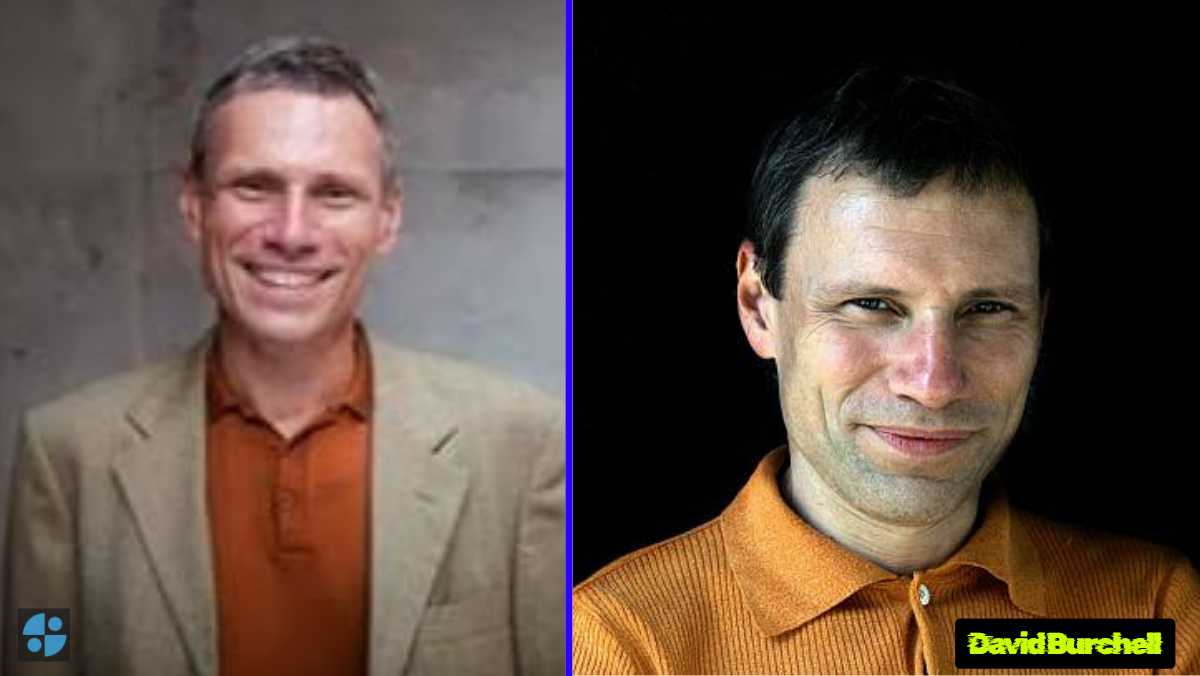
The name David Burchell may attract attention from readers who want to learn more about a person’s background, professional journey, personal experiences, and achievements. Whether someone encounters the name through an online search, a professional reference, a published work, or a discussion on the internet, the natural next step is to look for reliable information that explains who the person is and why the name is relevant. However, researching a person requires care because several individuals can share the same name, and information about one person may not apply to another. Understanding the context behind a name is therefore an important part of building an accurate picture.
When exploring David Burchell, it is useful to consider the different aspects that make a biography meaningful. These include early life, education, career development, professional interests, notable contributions, and public recognition. Each area can help readers understand a person’s journey, provided that the information is supported by trustworthy sources. Rather than relying on assumptions or repeating unverified claims, a responsible overview should distinguish confirmed facts from information that remains uncertain. This approach gives readers a clearer understanding of the subject while avoiding confusion between people with similar names.
The question of who David Burchell is cannot be answered accurately from the name alone. More than one individual may use this name, and their backgrounds, occupations, and public profiles may be entirely different. One person might be known for professional work, another for academic interests, and another through local community involvement or personal achievements. Without additional identifying details, assigning a particular occupation, nationality, or life story to the name could lead to inaccurate information.
For readers researching David Burchell, the most important first step is to identify the correct individual. A profession, country, organization, published work, or other relevant detail can help distinguish one person from another. This is especially important when researching people who do not have extensive public biographies. A careful identification process makes subsequent research more useful and reduces the likelihood of confusing unrelated individuals.
A meaningful biography should also explain why a person is being discussed. A name may appear in a professional directory, an article, a historical document, or a public record, but each appearance provides a different level of information. A directory entry, for example, may confirm a professional connection without revealing anything about childhood or personal life. Understanding these distinctions helps readers evaluate what is actually known about David Burchell.
Education is an important part of understanding the professional development of any academic, particularly someone whose work focuses on politics, history, culture, and society. The publicly available academic profile of David Burchell at Western Sydney University identifies him as a scholar with a Doctor of Philosophy (PhD) and a Bachelor of Arts (BA). These qualifications provide a foundation for understanding his academic career and his involvement in humanities research.
A background in the humanities typically involves examining how people think, communicate, organize societies, and interpret historical events. Subjects such as political philosophy, sociology, history, and cultural studies can help researchers investigate the relationship between individual beliefs and wider social institutions. Burchell’s published research reflects an interest in several of these interconnected areas, particularly citizenship, political ideas, and the development of public debate.
Although his academic qualifications are documented, detailed information about his childhood, birthplace, and early family life is not established by the academic profile cited here. It would therefore be inappropriate to present specific personal details as confirmed facts. For readers interested in his life story, the distinction between documented professional information and unverified biographical claims is essential to understanding David Burchell accurately.
David Burchell is known for his work in Australian academia and public commentary. His professional profile at Western Sydney University identifies him as a senior lecturer in the School of Arts. His academic activities include research and writing on topics that connect political thought, cultural history, and the ways people understand their responsibilities as members of society.
Working in higher education involves more than delivering lectures. Academic professionals may contribute to research projects, publish scholarly articles, participate in intellectual discussions, and help students develop the skills needed to analyze complex questions. Their work can also bring historical ideas into conversations about contemporary political and social challenges. Burchell’s published research provides examples of how academic inquiry can connect historical perspectives with modern public concerns.
His research record includes journal articles, book chapters, and authored or co-authored books. These publications demonstrate an interest in exploring ideas through sustained analysis rather than relying solely on short-form commentary. Academic writing also requires researchers to examine existing scholarship, evaluate competing interpretations, and present arguments supported by evidence. Such methods are especially important when studying controversial subjects, including citizenship, multiculturalism, and political identity.
In addition to his academic work, David Burchell has been associated with Australian political journalism and public commentary. Biographical information about him identifies contributions to The Australian, the Australian Financial Review, and Griffith Review. He has also appeared on the Australian Broadcasting Corporation’s Radio National program Counterpoint, where political and social questions have been discussed with invited contributors.
Political commentary differs from academic research in its purpose and presentation. Academic writing often develops detailed arguments over many pages, while journalism generally seeks to explain current issues to readers within a shorter format. A commentator working in both environments must be able to communicate complex ideas clearly without losing sight of the evidence or the historical background.
Burchell’s public commentary has included discussion of political change and the shifting meaning of familiar political labels. In a 2017 Counterpoint segment, he discussed how international developments and changing voter attitudes were affecting conventional distinctions between political groups. Such subjects remain relevant to understanding elections, public opinion, and the relationship between political parties and their supporters. However, individual commentaries should be understood in their original context rather than treated as statements that automatically describe every later political development.
One way to understand a writer’s interests is to examine the subjects addressed in their books. David Burchell has been associated with several publications concerning Australian politics and the country’s political landscape. These works explore political institutions, public attitudes, and the challenges facing political parties.
One of his books is Labor’s Troubled Times, published by Pluto Press in 1991. The work is associated with discussions of the Australian Labor Party and its political circumstances. Political histories of this kind help readers understand how parties respond to changing public expectations, internal disagreements, leadership challenges, and broader social developments.
Another notable title is The Prince’s New Clothes: Why Do Australians Dislike Their Politicians?, co-authored with others and published by UNSW Press in 2002. Its title highlights an enduring question in democratic societies: why do citizens sometimes become dissatisfied with elected representatives? Public trust can be influenced by political promises, government performance, communication, perceived accountability, and the distance people feel between political institutions and their everyday experiences.
Burchell is also associated with Western Horizon: Sydney’s Heartland and the Future of Australian Politics, published by Scribe Books in 2003. The book connects questions about Sydney’s social and political landscape with wider considerations about Australia’s political future. Regional identity, employment, population changes, and community expectations can all influence voting patterns and public debate. Examining these factors can help readers understand why political preferences differ between communities.
Together, these publications illustrate the connection between political history and contemporary public life. They also offer readers an opportunity to explore the arguments in greater depth instead of relying only on brief descriptions of a writer’s career.
David Burchell’s academic publications cover several topics within the humanities. One recurring area is the relationship between political ideas and the societies in which they develop. Political beliefs do not emerge in isolation; they are shaped by historical circumstances, cultural traditions, public institutions, and debates about how communities should be governed.
His 2016 chapter Citizenship and Culture, published in a companion volume on intellectual history, examines how the meaning of citizenship has developed through different historical contexts. Citizenship is often discussed in terms of legal status, voting rights, and participation in public institutions. However, its intellectual history also raises questions about civic responsibility, shared values, community membership, and the relationship between individuals and political authority.
These questions are relevant because citizenship can mean different things to different people. Some emphasize legal rights and protections, while others focus on participation, public service, or a sense of belonging. Studying the historical development of these ideas helps explain why political debates about citizenship can become complicated and why apparently familiar terms may carry different meanings across periods and cultures.
Another subject in Burchell’s research is the relationship between technology and public discussion. His 2003 article Paradoxes of the Public Sphere: Enlightenment Fables and Digital Divides considers claims about the internet’s role in creating a more democratic environment for public debate. The article draws comparisons with earlier historical developments in communication and intellectual exchange.
The topic remains important in the digital age. Online platforms allow people to share information and express opinions quickly, but access to technology does not automatically guarantee informed discussion or equal influence. Questions about digital access, the quality of public debate, and the distribution of information remain central to understanding modern communication.
Multiculturalism is another subject connected with Burchell’s academic writing. His article Multiculturalism and Its Discontents: Majorities, Minorities and Toleration, published in the journal Ethnicities in 2001, examines debates surrounding multiculturalism and political attitudes in Australia.
Multiculturalism concerns the presence and interaction of different cultural, ethnic, and religious communities within a society. It raises important questions about equal treatment, cultural identity, social cohesion, minority rights, and the responsibilities of public institutions. These questions can be difficult because people may disagree about how a society should balance shared civic expectations with the recognition of cultural differences.
Research on multiculturalism often requires a careful examination of political language and public attitudes. Terms such as tolerance, integration, diversity, and belonging can have different meanings depending on the context in which they are used. Understanding these differences helps readers assess political arguments more thoughtfully.
Burchell’s work contributes to this wider academic discussion by examining multiculturalism as a subject shaped by political history and changing public opinion. His research should not be interpreted as a complete account of every debate about Australian diversity. Rather, it represents one contribution to an ongoing conversation about how societies manage cultural differences and maintain democratic institutions.
Intellectual history studies the development of ideas and how they influence individuals, institutions, and societies. Instead of looking only at major events, intellectual historians examine the concepts people use to explain those events and the ways those concepts change over time.
This approach is useful when studying political terms such as freedom, citizenship, democracy, authority, and equality. Although these words may appear straightforward, their meanings have changed across different historical periods. A concept that seems familiar today may have been understood differently by earlier thinkers, and those differences can affect how historical arguments are interpreted.
Burchell’s work on citizenship and culture demonstrates the relevance of this approach. Examining the history of an idea can reveal assumptions that might otherwise remain unnoticed. It can also help readers understand why political debates frequently involve disagreements not only about facts but also about the meaning of important concepts.
Intellectual history can be valuable beyond universities. Journalists, policymakers, students, and ordinary readers can use historical perspectives to evaluate modern debates more carefully. By placing current questions within a longer historical framework, researchers can challenge oversimplified explanations and identify connections between past arguments and contemporary concerns.
The relevance of a scholar’s work depends partly on whether the questions they investigate continue to matter. Political trust, citizenship, cultural diversity, and public communication remain important topics in many countries. Changes in technology, migration, economic conditions, and political participation continue to influence the ways people understand their relationship with governments and communities.
Burchell’s writing provides material for considering these issues through historical and analytical perspectives. His work on the public sphere, for example, offers a way to think about the promises and limitations of new communication technologies. His research on multiculturalism provides historical context for discussions about diversity and social cohesion, while his writing on citizenship explores the relationship between individuals and political communities.
It is important, however, to distinguish enduring questions from conclusions tied to a particular period. An article published in 2001 or 2003 reflects the debates and circumstances of its time. Readers can use such work to understand historical developments, but they should also consider newer research when assessing current events.
The continuing value of academic writing often lies in its ability to provide useful questions, analytical frameworks, and historical context. A reader does not need to agree with every argument in a publication to benefit from examining its evidence and reasoning. Engaging critically with scholarly work can strengthen understanding and encourage more informed public discussion.
Readers searching for David Burchell may also be interested in his family, age, birthplace, relationships, or other personal details. However, these subjects should be approached carefully because publicly available professional biographies do not necessarily contain comprehensive personal information.
The academic sources discussed in this article primarily document his qualifications, professional position, and publications. They do not establish a complete account of his early life, exact date of birth, private relationships, or financial circumstances. Consequently, assigning him a specific age, estimating his net worth, or describing personal events without reliable evidence would be misleading.
This distinction is particularly important when a person shares a name with other individuals. Search results can combine information from separate professional profiles, news reports, and personal records. Before accepting a claim, readers should check whether it clearly refers to the same individual and whether the source provides evidence for the information being presented.
Respecting these limits does not make a biography less useful. Instead, it ensures that the information available to readers is presented honestly. For someone whose professional contributions are documented through research and publications, examining that work is often a more reliable way to understand their public significance than relying on speculation about private matters.
Anyone who wants to learn more about David Burchell can begin with institutional academic profiles and publication records. A university profile can help establish professional affiliation and qualifications, while academic databases can identify published articles, book chapters, and research subjects. Publisher catalogues can provide additional information about books and their publication dates.
When comparing sources, readers should pay attention to dates and context. An older biography may describe a position held many years ago rather than a person’s current employment. Similarly, a publication record can establish that an article exists without confirming every claim made about its author elsewhere.
It is also useful to separate confirmed information from interpretation. For example, the title of a book can indicate its subject, but understanding its full argument requires examining the publication itself. Likewise, appearing on a radio program establishes participation in a discussion, not necessarily agreement with every view expressed during that conversation.
A reliable research process uses multiple relevant sources, checks names and affiliations, and avoids treating unsupported online claims as facts. These habits are useful not only when researching David Burchell but also when investigating academics, journalists, authors, and other people whose work appears across different publications.
David Burchell is an Australian academic and political commentator associated with Western Sydney University. His documented work includes humanities research, political writing, and publications examining citizenship, culture, multiculturalism, and Australian politics.
He is known for his academic research and public commentary on political and social issues. His published works include Western Horizon, The Prince’s New Clothes, and Labor’s Troubled Times, as well as scholarly articles and chapters on citizenship, culture, and public debate.
His academic profile lists a Bachelor of Arts and a Doctor of Philosophy. His research and publications demonstrate interests in political thought, intellectual history, citizenship, and cultural questions.
Yes. He is associated with several books about Australian politics, including Labor’s Troubled Times (1991), The Prince’s New Clothes: Why Do Australians Dislike Their Politicians? (2002), and Western Horizon: Sydney’s Heartland and the Future of Australian Politics (2003).
Readers can consult his institutional profile at Western Sydney University, academic publication databases, scholarly journals, and reputable publisher catalogues. These sources are useful for verifying his professional background and publications while avoiding confusion with other people who share his name.
David Burchell is an academic and political commentator whose documented work explores important questions about Australian politics, citizenship, multiculturalism, intellectual history, and public communication. His association with Western Sydney University and his published books and scholarly articles provide a foundation for understanding his professional contributions. Rather than presenting unsupported details about his personal life, a reliable account focuses on the work that can be verified and the ideas that emerge from it.
For readers interested in political thought and social change, Burchell’s publications offer opportunities to examine how historical ideas influence modern institutions and public debates. His writing on citizenship and culture encourages closer attention to the meanings behind familiar political concepts, while his work on multiculturalism and the public sphere highlights the challenges involved in building informed and inclusive societies. Exploring these subjects through credible academic sources provides a clearer picture of David Burchell’s professional identity and the broader significance of his work.
You may also read Jasper Robards: Biography, Family Background, Famous Parents, and Life Away From the Spotlight
For more visite website proguesthub.com