Physical Address
304 North Cardinal St.
Dorchester Center, MA 02124
Physical Address
304 North Cardinal St.
Dorchester Center, MA 02124

Discover the Craft of Authority Publishing
Discover the Craft of Authority Publishing
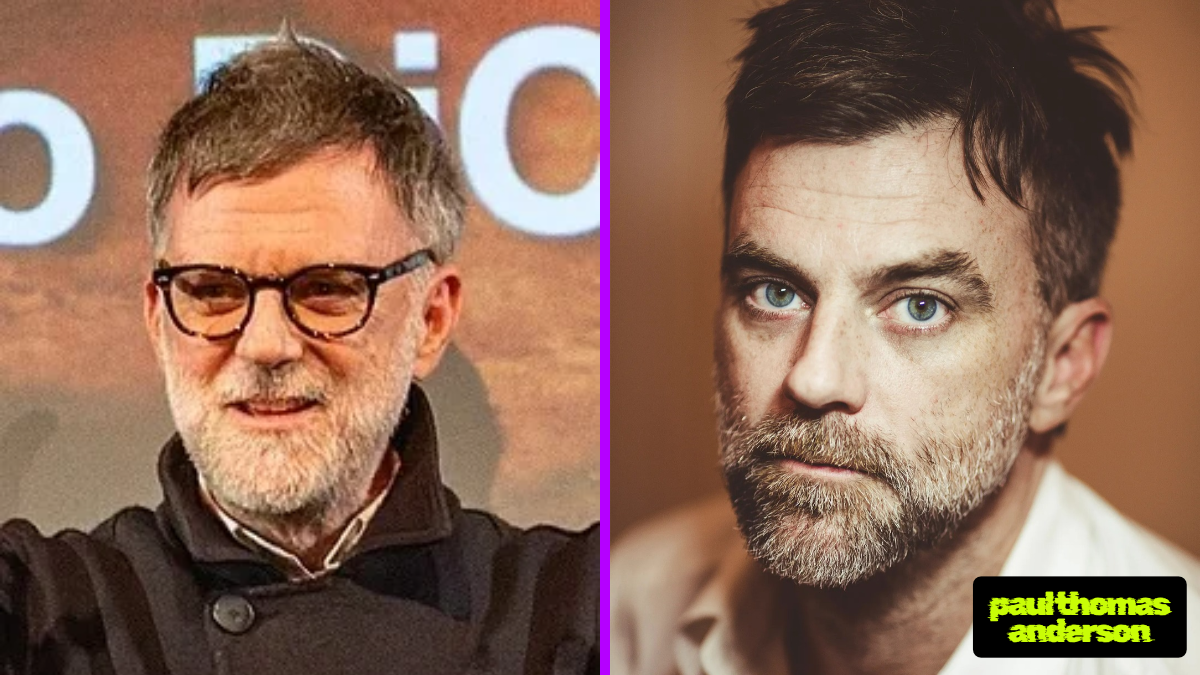
Paul Thomas Anderson is one of the most respected filmmakers in modern American cinema, known for creating emotionally powerful stories, unforgettable characters, and visually distinctive movies. Throughout his career, Anderson has developed a unique filmmaking style that combines psychological drama, dark comedy, historical storytelling, and complicated human relationships. His films frequently explore ambition, loneliness, family conflict, obsession, personal identity, and the desire for connection.
Born in California, Anderson grew up surrounded by entertainment and developed an interest in filmmaking at an early age. His passion for movies eventually transformed into a successful career as a director, screenwriter, and producer. Unlike filmmakers who primarily work with established franchises, Anderson has built his reputation through original stories and distinctive cinematic experiences. His ability to create memorable characters and explore complicated emotions has made him an important figure in contemporary Hollywood.
From Boogie Nights and Magnolia to There Will Be Blood and Phantom Thread, his filmography demonstrates remarkable creative variety. Anderson has worked with some of the industry’s most celebrated performers, including Daniel Day-Lewis, Joaquin Phoenix, Philip Seymour Hoffman, Tom Cruise, and Adam Sandler. His movies have received international recognition, and his filmmaking continues to influence audiences, critics, and aspiring directors.
Paul Thomas Anderson is an American film director, screenwriter, and producer widely recognized for his original storytelling and distinctive visual approach. He was born on June 26, 1970, in Studio City, California, and grew up in an environment connected to the entertainment industry. His father, Ernie Anderson, was a television personality and voice artist, giving the young filmmaker an early introduction to broadcasting and entertainment.
Anderson became interested in movies during childhood and developed a strong fascination with storytelling, cameras, and editing. His early experiences with video equipment helped him understand how images could communicate emotions and ideas. Rather than waiting for professional opportunities, he began experimenting with filmmaking independently, developing the creative confidence that would eventually define his career.
His work is often associated with character-driven cinema, meaning that the emotional experiences, motivations, and personalities of characters remain central to the story. Anderson frequently creates protagonists who struggle with loneliness, ambition, anger, insecurity, or difficult relationships. These characters are rarely completely good or completely bad, making their experiences feel complicated and believable.
Over the years, Anderson has become known for maintaining a strong creative identity while working with major studios and internationally recognized actors. His movies often challenge conventional storytelling expectations, allowing scenes to develop through conversations, atmosphere, visual details, and carefully constructed performances.
Paul Thomas Anderson grew up in Studio City, a California community closely associated with television and entertainment production. Being raised in a showbusiness environment introduced him to the creative possibilities of filmmaking, although his eventual career was shaped primarily by his personal interests and determination.
His father, Ernie Anderson, worked as an announcer and voice artist and became particularly recognizable through his television work. This connection to entertainment helped Anderson become familiar with the industry from an early age. However, his interest extended beyond simply watching television or movies. He wanted to understand how filmmakers created stories and how different technical elements could produce powerful emotional experiences.
During his childhood, Anderson experimented with video cameras and learned basic editing techniques. These early experiments allowed him to explore storytelling without needing expensive professional equipment. He became particularly interested in the relationship between performances, camera movement, dialogue, and editing.
As a teenager, Anderson began developing short film projects that demonstrated his interest in complicated characters and realistic environments. One important early project was The Dirk Diggler Story, a mockumentary about a fictional adult-film performer. This short film eventually became the creative foundation for his later feature movie Boogie Nights.
His early filmmaking experiences helped him develop practical knowledge and a personal creative approach. Instead of relying exclusively on formal education, Anderson learned through experimentation, observation, and independent projects.
Anderson briefly attended New York University but left after a short period. He subsequently worked in different production-related positions, gaining experience with television programs, movies, and entertainment projects.
These early jobs introduced him to the practical responsibilities involved in professional filmmaking. Working behind the scenes allowed him to observe how productions organized schedules, managed performers, handled equipment, and transformed written scripts into finished entertainment.
His experiences as a production assistant were valuable because they exposed him to the challenges of filmmaking without immediately placing him in a major directing position. He could develop his understanding of the industry while continuing to work on his own creative projects.
During this period, Anderson also developed the short film Cigarettes & Coffee. The project demonstrated his interest in stories involving ordinary people whose lives become connected through unexpected circumstances.
The short received attention at the Sundance Film Festival and helped him gain opportunities to develop a feature-length project. Its success became an important turning point because it demonstrated that Anderson could create compelling cinema with limited resources.
Hard Eight, released in 1996, introduced Anderson as a feature-film director. Originally developed under the title Sydney, the movie established several themes that would become important throughout his career, including loneliness, personal responsibility, crime, and complicated relationships.
The story follows an experienced gambler who develops a relationship with a younger man struggling with financial problems. Their connection becomes increasingly complicated as personal secrets and criminal circumstances begin to influence their lives.
Anderson approached the story with a relatively restrained visual style compared with some of his later movies. The film focuses on performances, conversations, and the gradual development of relationships rather than relying on constant action.
Philip Baker Hall, John C. Reilly, Gwyneth Paltrow, and Samuel L. Jackson contributed to the film’s cast. Their performances helped establish Anderson’s interest in working with actors who could communicate complicated emotions through subtle gestures and dialogue.
Hard Eight also introduced audiences to Anderson’s ability to create atmosphere. Casinos, diners, and ordinary locations become important parts of the characters’ emotional environments.
Although the movie did not immediately achieve the commercial success of his later work, it established the foundation for his career and demonstrated his potential as an original filmmaker.
Boogie Nights, released in 1997, became a major breakthrough for Paul Thomas Anderson. The film explores the adult-film industry during the late 1970s and early 1980s, following the experiences of a young performer who becomes increasingly successful while navigating personal and professional challenges.
Mark Wahlberg plays Dirk Diggler, the central character whose rise to fame is connected to a larger community of performers, producers, directors, and industry personalities. The movie examines how success can change relationships and how individuals struggle when their professional environments begin to transform.
Anderson’s storytelling combines humor, drama, and emotional intensity. The characters frequently make questionable decisions, but the film also demonstrates an interest in their personal vulnerabilities and desire for acceptance.
One of the movie’s defining characteristics is its ensemble structure. Rather than focusing exclusively on Dirk, Anderson develops several supporting characters whose experiences contribute to the broader story.
The film also explores the transition from the adult-film industry’s relatively informal production environment to a more commercialized system shaped by technological change. This transformation creates opportunities for some characters while producing uncertainty and disappointment for others.
Boogie Nights received critical recognition and helped establish Anderson as an ambitious young director. Its success also demonstrated that audiences could respond to challenging original stories when they were supported by strong performances and compelling filmmaking.
Released in 1999, Magnolia is one of Anderson’s most ambitious early films. The movie follows several characters living in the San Fernando Valley whose experiences become connected through family problems, emotional struggles, professional pressures, and unexpected events.
The film examines loneliness, regret, forgiveness, and the difficulty of understanding other people. Its characters frequently struggle to communicate honestly, and their emotional problems often become more complicated because of decisions made years earlier.
Tom Cruise delivers a memorable performance as Frank T.J. Mackey, a motivational speaker whose public confidence conceals unresolved personal pain. His character demonstrates Anderson’s interest in examining the difference between public identity and private emotional reality.
Magnolia also features an ensemble cast that includes Julianne Moore, Philip Seymour Hoffman, William H. Macy, John C. Reilly, and Melora Walters. Each performer contributes to the film’s interconnected storytelling structure.
The movie is particularly notable for its long runtime and emotional intensity. Anderson allows different storylines to develop gradually, creating a larger picture of human experience through multiple perspectives.
Although Magnolia can feel overwhelming because of its many characters and dramatic situations, its central message concerns the importance of compassion. The film suggests that people frequently carry invisible emotional burdens and that understanding their experiences requires patience.
In 2002, Anderson released Punch-Drunk Love, a romantic drama starring Adam Sandler and Emily Watson.
The movie follows Barry Egan, a socially uncomfortable businessman whose emotional difficulties affect his relationships and everyday life. Barry experiences anxiety, anger, and loneliness while attempting to establish a meaningful romantic connection.
Anderson created the role specifically around Sandler’s screen personality, demonstrating his interest in discovering dramatic possibilities within performers commonly associated with comedy.
The movie’s visual style differs considerably from the naturalistic approach of Boogie Nights and Magnolia. Bright colors, unusual framing, intense sound design, and carefully controlled camera movement create an atmosphere that reflects Barry’s emotional instability.
Despite its unusual presentation, Punch-Drunk Love remains a deeply human story about vulnerability and connection. Barry’s relationship with Lena gradually encourages him to confront his insecurities and develop greater confidence.
The film also demonstrates Anderson’s willingness to experiment with genre. Instead of following a conventional romantic-comedy structure, he creates a story that combines romance, psychological drama, and moments of surreal humor.
Punch-Drunk Love received positive recognition and helped establish Anderson as a filmmaker capable of creating dramatically different movies without losing his distinctive creative identity.
There Will Be Blood, released in 2007, is widely regarded as one of Anderson’s most significant films. The historical drama follows Daniel Plainview, an ambitious oil prospector whose pursuit of wealth gradually transforms his personality and relationships.
Daniel Day-Lewis delivers the central performance, portraying a character whose determination becomes increasingly connected to greed, manipulation, and emotional isolation.
The film explores the relationship between business, religion, power, and personal ambition during the American oil boom. Plainview’s conflicts with a local preacher demonstrate how competing forms of authority can influence communities and individual lives.
Anderson’s direction emphasizes the physical landscape, creating a powerful contrast between the vastness of the environment and the increasingly destructive behavior of the central character.
The movie also features an unforgettable musical score by Jonny Greenwood, whose experimental compositions contribute to its tense and unsettling atmosphere.
There Will Be Blood received multiple Academy Award nominations and won awards for Daniel Day-Lewis’s performance and Robert Elswit’s cinematography.
Its combination of historical storytelling, psychological complexity, and visual ambition helped strengthen Anderson’s reputation as one of the most accomplished directors of his generation.
The Master, released in 2012, explores the relationship between Freddie Quell, a troubled World War II veteran, and Lancaster Dodd, the charismatic leader of a philosophical movement.
Joaquin Phoenix portrays Freddie, whose unstable behavior and unresolved emotional problems make it difficult for him to establish lasting relationships.
Philip Seymour Hoffman plays Lancaster, a persuasive figure whose teachings attract followers seeking purpose, certainty, and personal transformation.
The film examines how people respond to uncertainty and how charismatic personalities can influence vulnerable individuals.
Anderson avoids presenting the relationship through a straightforward explanation of right and wrong. Instead, he allows viewers to observe the emotional connection between the characters and interpret its meaning.
Amy Adams also delivers an important performance as Lancaster’s wife, contributing to the film’s exploration of influence, control, and relationships.
The Master received significant critical recognition, particularly for its performances, cinematography, and complex storytelling.
Inherent Vice, released in 2014, is Anderson’s adaptation of Thomas Pynchon’s novel.
The film follows private investigator Larry “Doc” Sportello, a marijuana-smoking detective who becomes involved in a complicated investigation involving missing people, criminal activity, and mysterious relationships.
Joaquin Phoenix plays Doc, bringing a combination of humor, confusion, and emotional vulnerability to the character.
The movie takes place in California during the early 1970s, a period associated with cultural change, political uncertainty, and shifting social attitudes.
Anderson uses the detective-story framework to explore paranoia, nostalgia, and the difficulty of understanding a world where information is incomplete.
Unlike a conventional mystery, Inherent Vice deliberately allows certain questions to remain unresolved. Its narrative reflects Doc’s experience of navigating an increasingly confusing environment.
The film demonstrates Anderson’s ability to adapt challenging literary material while preserving his interest in character-driven storytelling.
Phantom Thread, released in 2017, takes place in the London fashion world of the 1950s.
Daniel Day-Lewis portrays Reynolds Woodcock, a celebrated designer whose carefully controlled professional and personal routines become complicated when he meets Alma, played by Vicky Krieps.
The relationship develops through attraction, conflict, manipulation, and unexpected emotional dependence.
Anderson explores how creative ambition can influence personal relationships. Woodcock’s dedication to his work makes him successful, but it also creates difficulties for people who attempt to enter his carefully organized life.
The film’s atmosphere is elegant and controlled, reflecting the fashion industry and the protagonist’s personality.
Jonny Greenwood’s score contributes to the movie’s emotional complexity, while the costumes and production design establish a distinctive historical environment.
Phantom Thread received multiple Academy Award nominations and won the award for Best Costume Design.
Licorice Pizza, released in 2021, returns Anderson to the San Fernando Valley, a setting that appears throughout his filmography.
The story follows Gary Valentine, a teenage actor and entrepreneur, and Alana Kane, a young woman navigating adulthood and uncertainty.
The movie explores ambition, attraction, friendship, and the confusing experiences associated with growing up.
Cooper Hoffman and Alana Haim lead the film, bringing a naturalistic quality to its episodic storytelling.
Rather than following a tightly structured dramatic plot, Licorice Pizza develops through encounters, conversations, business ventures, and unexpected situations.
Its historical setting allows Anderson to explore the cultural atmosphere of the early 1970s while examining the emotional experiences of its central characters.
The film received Academy Award nominations for Best Picture, Best Director, and Best Original Screenplay.
One Battle After Another, released in 2025, represents another major chapter in Anderson’s career.
The film draws inspiration from Thomas Pynchon’s novel Vineland and combines political themes, action, family relationships, and social conflict.
Leonardo DiCaprio leads the cast as Bob Ferguson, a former revolutionary whose past becomes connected to a dangerous situation involving his daughter.
The movie explores resistance, identity, political extremism, and the consequences of personal decisions.
Its larger scale demonstrates Anderson’s willingness to work with ambitious productions while maintaining his interest in complicated characters.
The film also features performances from Sean Penn, Benicio del Toro, and Teyana Taylor.
One Battle After Another achieved significant recognition and became an important commercial success for Anderson.
Its combination of action, satire, and emotional storytelling illustrates how his filmmaking has continued to evolve while preserving his interest in human relationships and social conflict.
One of the most recognizable aspects of Paul Thomas Anderson’s filmmaking is his attention to character psychology.
His protagonists frequently struggle with insecurity, emotional isolation, personal ambition, and complicated relationships. Instead of presenting characters as simple heroes or villains, Anderson explores the contradictions that influence their decisions.
Another important element is his use of camera movement. Long tracking shots, carefully organized compositions, and moving cameras frequently create a sense of physical involvement in the story.
Anderson also pays considerable attention to music. His collaborations with Jonny Greenwood have produced memorable scores that contribute to the atmosphere and emotional intensity of several films.
His storytelling often combines dramatic scenes with unexpected humor. Even his most serious movies contain moments of absurdity that make the characters feel more human.
These creative choices have helped establish Anderson’s distinctive cinematic identity.
Paul Thomas Anderson has received widespread recognition for his work as a director and screenwriter.
His films have earned numerous Academy Award nominations, and his career includes recognition from major international film festivals and industry organizations.
He has received awards and nominations connected to directing, writing, producing, and the creative achievements of his films.
Anderson’s international reputation is also supported by his success at major film festivals, including Cannes, Venice, and Berlin.
His achievements demonstrate that original filmmaking can remain influential in an industry increasingly shaped by established franchises and large commercial productions.
Beyond awards, his greatest professional achievement may be the consistency of his creative identity. His movies continue to attract audiences interested in original storytelling and complex characters.
Paul Thomas Anderson maintains a relatively private personal life despite his public career.
He has been in a long-term relationship with actress and comedian Maya Rudolph since 2002. The couple have four children together.
Anderson’s personal experiences and family background have contributed to his understanding of relationships, although his films should not automatically be interpreted as direct reflections of his private life.
He generally avoids excessive public attention and focuses on filmmaking rather than maintaining a highly visible celebrity lifestyle.
His private approach allows audiences to concentrate on his creative work and the ideas explored through his movies.
Paul Thomas Anderson remains influential because he consistently demonstrates that filmmaking can combine artistic ambition with meaningful storytelling.
His movies explore universal experiences such as loneliness, ambition, family conflict, love, and the search for identity.
He also demonstrates the importance of collaboration. His repeated partnerships with actors, cinematographers, composers, and producers have helped create a recognizable cinematic world.
Another reason for his influence is his willingness to experiment. Anderson has moved between crime dramas, historical films, romantic stories, literary adaptations, and politically charged action movies.
Despite these changes, his work remains connected through its attention to character psychology and emotional complexity.
For aspiring filmmakers, Anderson’s career offers an important lesson: developing a distinctive voice can be more valuable than simply following established trends.
His films encourage audiences to consider the motivations behind human behavior and the emotional consequences of personal choices.
Paul Thomas Anderson has established himself as one of the most distinctive and influential filmmakers in contemporary American cinema. From his early independent projects to internationally recognized movies such as Boogie Nights, Magnolia, There Will Be Blood, Phantom Thread, and One Battle After Another, his career demonstrates remarkable creative growth.
His filmmaking combines powerful performances, detailed visual storytelling, memorable music, and emotionally complex characters. Anderson’s movies frequently examine ambition, loneliness, relationships, identity, and the difficult choices people make throughout their lives.
His collaborations with talented actors and creative professionals have helped produce some of modern cinema’s most memorable performances and scenes.
Although his films vary in genre, setting, and narrative structure, they share a commitment to original storytelling and psychological depth.
Ultimately, Paul Thomas Anderson’s importance comes from his ability to create movies that entertain while encouraging audiences to think about human behavior, personal relationships, and the world around them. His continued creative evolution makes him an important filmmaker whose work will remain relevant to movie lovers for years to come.
Paul Thomas Anderson is an American film director, screenwriter, and producer known for movies including Boogie Nights, Magnolia, There Will Be Blood, The Master, and Phantom Thread.
There Will Be Blood is widely considered one of his most celebrated films. Other highly recognized movies include Boogie Nights, Magnolia, Phantom Thread, and One Battle After Another.
Paul Thomas Anderson was born on June 26, 1970. His age depends on the current date, and he turns another year older every June 26.
Yes. Anderson won Academy Awards for directing, adapted screenplay, and Best Picture associated with One Battle After Another at the 2026 ceremony.
His filmmaking is known for complex characters, psychological storytelling, long camera movements, memorable music, detailed performances, and themes involving ambition, loneliness, family, and human relationships.
You may also read : Karen Robards: Biography, Famous Books, Writing Career, and Literary Legacy
For more visit proguesthub.com