Physical Address
304 North Cardinal St.
Dorchester Center, MA 02124
Physical Address
304 North Cardinal St.
Dorchester Center, MA 02124

Discover the Craft of Authority Publishing
Discover the Craft of Authority Publishing
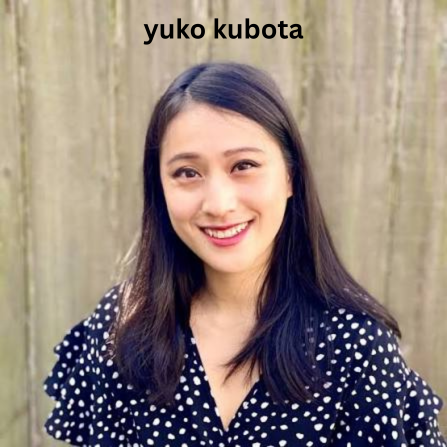
In the world of modern journalism, credibility, depth, and clarity are qualities that define reporters who leave a lasting impact. Yuko Kubota stands among those professionals whose work reflects a strong commitment to accurate reporting, global awareness, and thoughtful storytelling. Known for her sharp insights and disciplined journalistic approach, she has built a reputation that resonates with readers who value well-researched and balanced news coverage. This article explores Yuko Kubota’s background, career evolution, reporting style, professional influence, and the broader significance of her work in today’s fast-changing media landscape.
Every journalist’s journey begins with curiosity, and in the case of Yuko Kubota, that curiosity appears deeply connected to understanding the world beyond surface-level narratives. From an early stage, her interest in global affairs, economics, and social developments shaped her inclination toward journalism. Rather than focusing on sensationalism, she gravitated toward fact-based reporting and contextual storytelling, which later became defining features of her professional identity.
Her early exposure to international perspectives played an important role in shaping her analytical mindset. Journalism, for her, was not merely about reporting events but about explaining why events matter, how they affect societies, and what underlying forces drive them. This foundation helped her develop the ability to communicate complex topics in a clear and accessible way, a skill that distinguishes impactful reporters from average ones.
As Yuko Kubota advanced in her career, she steadily refined her voice and journalistic focus. Her work reflects a disciplined approach rooted in research, verification, and thoughtful interpretation of events. She has demonstrated the ability to cover topics that demand both technical understanding and human sensitivity, particularly in areas such as international affairs, business trends, and economic developments.
Professional growth in journalism often depends on adaptability, and Kubota’s career reflects this adaptability well. She has navigated evolving media environments where digital platforms, rapid news cycles, and audience expectations constantly change. Instead of compromising depth for speed, she has maintained a balance between timely reporting and analytical rigor, ensuring her work remains relevant and trustworthy.
Her career path also illustrates how consistency and credibility gradually earn recognition. Rather than relying on personal branding alone, she allowed the quality of her reporting to speak for itself, building professional respect over time.

One of the most notable aspects of Yuko Kubota’s work is her reporting style. She emphasizes clarity without oversimplification, ensuring that readers can understand complex subjects without losing essential nuance. Her writing avoids unnecessary dramatization and instead focuses on verified facts, informed analysis, and structured narratives.
Another defining characteristic is her ability to place events within a broader context. Rather than presenting isolated incidents, she connects them to historical trends, policy decisions, or economic frameworks. This approach helps readers grasp the long-term implications of current developments, which is especially valuable in fields like global economics and geopolitics.
Her journalistic approach also reflects strong ethical standards. Accuracy, accountability, and fairness appear central to her work, reinforcing reader trust. In an era where misinformation spreads easily, this commitment to responsible journalism is increasingly significant.
A substantial part of Yuko Kubota’s professional identity is linked to her coverage of global and economic issues. These topics require not only technical knowledge but also the ability to interpret data and explain its real-world consequences. Kubota’s reporting demonstrates an understanding of how economic policies, market trends, and geopolitical shifts influence societies and individuals alike.
She often explores how large-scale decisions affect everyday lives, bridging the gap between abstract economic concepts and practical realities. This human-centered perspective allows readers to connect with topics that might otherwise seem distant or overly technical. Her work shows that economics and global affairs are not just numbers and policies but stories about people, industries, and nations navigating change.
The influence of Yuko Kubota extends beyond individual articles. Through consistent, high-quality reporting, she contributes to shaping informed public discourse. Journalists like Kubota play a crucial role in helping audiences understand complex global dynamics, especially during periods of economic uncertainty or political transformation.
Her influence is also evident in how she represents a generation of journalists who value depth over noise. While modern media often prioritizes speed and virality, her work demonstrates that there is still strong demand for thoughtful analysis and credible reporting. This influence encourages higher standards within the profession and reminds readers of journalism’s core purpose: to inform, not to mislead.
No journalist operates without challenges, and Yuko Kubota’s career exists within a media environment marked by constant change. The rise of digital platforms, shifting audience behaviors, and economic pressures on news organizations all shape how journalism is produced and consumed.
One key challenge is maintaining accuracy under tight deadlines. Kubota’s work suggests a deliberate effort to balance speed with verification, resisting the temptation to publish incomplete or speculative information. Another challenge lies in addressing misinformation, which requires journalists to be not only reporters but also educators who clarify false narratives.
Despite these obstacles, her career reflects resilience and adaptability. By focusing on journalistic integrity and continuous learning, she remains relevant and credible in an industry where trust is both fragile and essential.
Yuko Kubota’s presence in international journalism also highlights the importance of diverse perspectives in media. Journalism benefits when reporters bring varied cultural backgrounds and worldviews to their work, as this diversity enriches storytelling and reduces bias.
Her perspective allows for nuanced reporting that acknowledges multiple viewpoints, particularly in global coverage where cultural misunderstandings can easily arise. This emphasis on balanced perspectives contributes to more accurate and empathetic journalism, fostering better understanding among readers from different regions.
The ultimate measure of a journalist’s success lies in their impact on readers. Yuko Kubota’s reporting empowers audiences with knowledge, enabling them to make informed decisions and engage more thoughtfully with global issues. Her work encourages readers to look beyond headlines and consider the deeper factors shaping events.
By presenting information in a structured and accessible way, she helps demystify complex subjects. This impact is especially valuable in areas like economics and international relations, where misunderstanding can lead to oversimplified or polarized views.
Ethics form the backbone of credible journalism, and Yuko Kubota’s career reflects a strong commitment to truth and responsibility. Ethical journalism requires transparency, accuracy, and respect for sources, all of which appear central to her professional conduct.
In an era where trust in media is often questioned, journalists who uphold these values play a critical role in restoring confidence. Kubota’s work serves as an example of how adherence to ethical standards can coexist with compelling storytelling and timely reporting.
Looking ahead, the relevance of journalists like Yuko Kubota is likely to grow rather than diminish. As global challenges become more interconnected and complex, the need for clear, informed, and responsible reporting increases. Her experience and analytical approach position her well to continue contributing meaningful insights into global affairs.
Future journalism will likely demand even greater adaptability, technological awareness, and cross-cultural understanding. Kubota’s career trajectory suggests that she is well-equipped to navigate these demands while maintaining the principles that define quality journalism.
Yuko Kubota represents a model of modern journalism grounded in integrity, depth, and global awareness. Through her thoughtful reporting, analytical clarity, and ethical commitment, she contributes to a more informed public discourse. Her work demonstrates that journalism remains a powerful tool for understanding the world when practiced with responsibility and purpose. As media continues to evolve, journalists like Kubota remind us that credibility, context, and human insight remain essential pillars of meaningful reporting.
1. Who is Yuko Kubota?
Yuko Kubota is a professional journalist known for her work in global and economic reporting, recognized for her analytical and fact-based approach to journalism.
2. What topics does Yuko Kubota commonly cover?
She often covers international affairs, economic trends, and global business developments, focusing on context and long-term implications.
3. What makes Yuko Kubota’s journalism distinctive?
Her journalism stands out for its clarity, ethical standards, and ability to explain complex issues in an accessible manner without oversimplification.
4. Why is Yuko Kubota influential in modern media?
She influences modern journalism by prioritizing depth, accuracy, and responsible reporting in an era often driven by speed and sensationalism.
5. How does Yuko Kubota contribute to public understanding?
Through well-researched and balanced reporting, she helps readers gain a deeper understanding of global and economic issues, encouraging informed perspectives.
For more visite website proguesthub.com